
Appearance before the Standing Committee on Justice and Human Rights
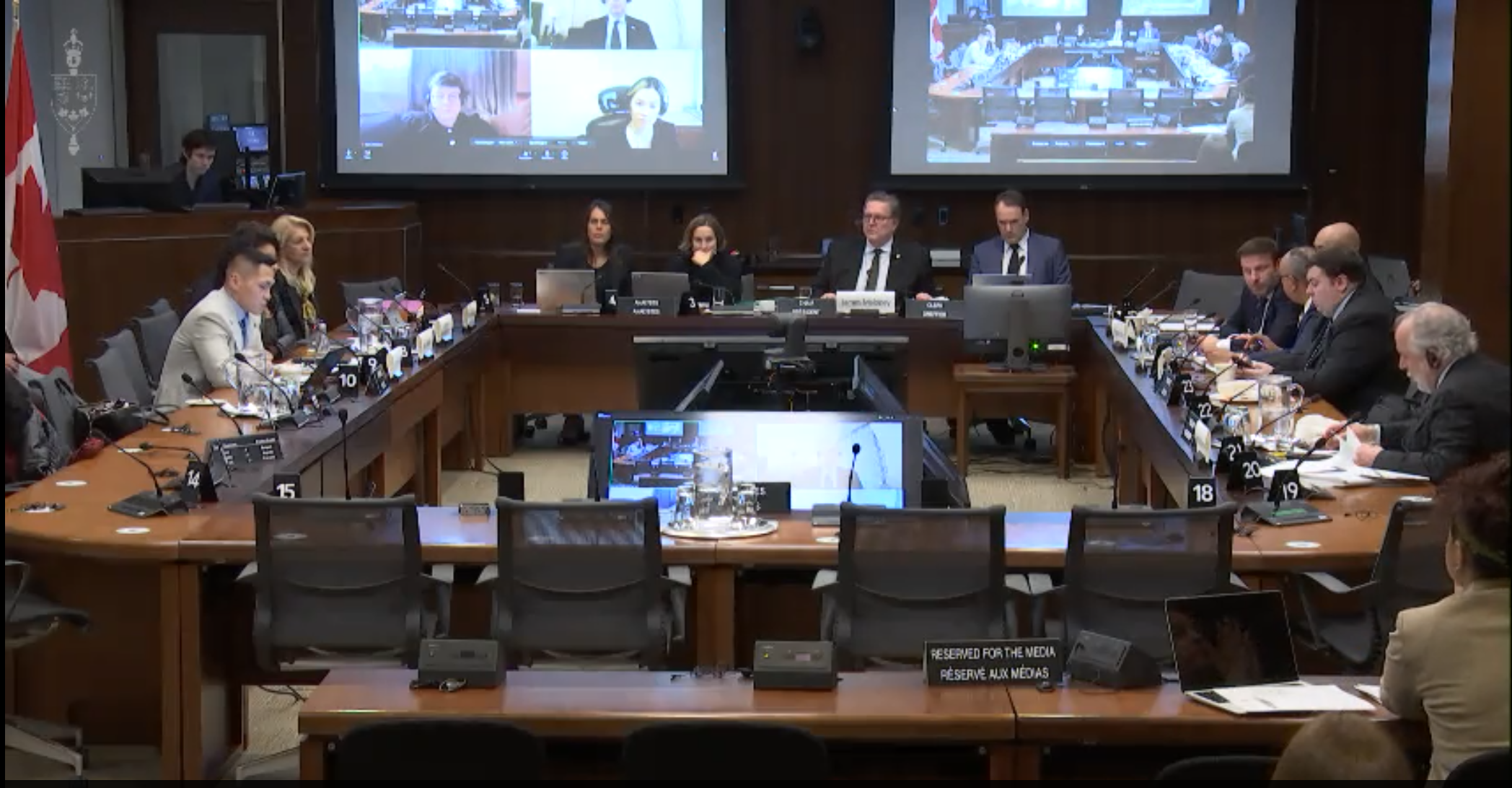
JUST Meeting No. 22
March 25, 2026 4:35 p.m. - 6:15 p.m. (EDT)
On March 25, 2026, Rise was invited to talk about Bill C-16, Protecting Victims Act, before the Standing Committee on Justice and Human Rights at the House of Commons.
Vicky Law, Rise’s Executive Director, spoke about our 2023 joint submission to the Department of Justice (DOJ) on criminalizing coercive and controlling legislation. Rise Women’s Legal Centre and West Coast LEAF made the submission in response to the DOJ’s consideration of establishing a new Criminal Code offence for coercive control in 2023.
As detailed in our submission, Vicky used this opportunity to share our experiences addressing coercive control within the context of family law in BC, where a range of psychological and emotional violence has been included in legislation for nearly a decade, with disappointing results.
We asked that the Committee consider the ways family law, family policing, and criminal law have interfaced with coercive control in BC. Criminalizing coercive control may assist in sending a message to society that these coercive and controlling behaviors are a serious form of violence deserving of strong sanction. However, the BC context demonstrates that legislative changes alone do not meaningfully tackle this behaviour and that robust education on coercive control within the legal system, social supports and services for survivors, as well as a careful multi-system approach is needed to create meaningful safety for survivors.
Rise was incredibly grateful for the opportunity to share our experience working with our clients, and to provide important BC context in Ottawa.
“In order to have effective laws to prevent further intimate partner violence, the creation of new criminal offences and new legal definitions require difficult and systemic work to address pervasive misconceptions, myths, stereotypes, and biases... It requires police and legal system professionals to recognize and assess subtle patterns occurring over long periods of time, rather than focusing on individual incidents of assault. This shift requires ongoing and widespread education, including significant commitment to training legal system participants.”
— Vicky Law, Executive Director